

Trade Finance Market Trends: Technology, Risk Management, and Cross-Border Growth
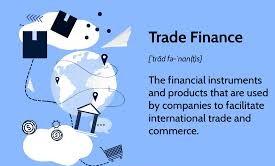
Welcome to today’s discussion on how modern banking infrastructure is undergoing a massive shift due to technological advancement and international commerce needs. In recent years, traditional paper-based documentation methods such as Letters of Credit and Bills of Exchange have faced increasing friction from digital ecosystems. Organizations across the globe are attempting to streamline supply chain transparency while reducing transaction times from weeks to mere hours. As international supply chains expand, the integration of distributed ledger technology and smart contracts is helping financial institutions eliminate fraudulent operations and lower operational overheads. To better understand these structural changes, industry leaders regularly monitor the Trade Finance Market analysis to assess where major commercial banks are directing their technology investments. By modernizing these legacy practices, financial providers can offer faster, safer liquidity to global importers and exporters who rely heavily on timely capital to sustain operational flows.
Looking ahead, the convergence of artificial intelligence and machine learning promises to further refine credit risk assessment models, enabling banks to automate document verification with unprecedented accuracy. Small and medium-sized enterprises (SMEs), which historically suffered from significant trade gap coverage, are now gaining access to previously inaccessible capital thanks to digital platforms. As cross-border trading corridors evolve across emerging markets, financial regulations must adapt alongside these digital tools to guarantee standardization and international interoperability. What are your thoughts on the speed at which legacy commercial banks are integrating these automated systems compared to agile fintech platforms?
FAQs:
-
Q: What is driving the shift toward digitalization in trade finance?
-
A: The shift is primarily driven by the need for greater operational efficiency, reduced transaction processing times, enhanced supply chain visibility, and the mitigation of cross-border trade fraud.
-
-
Q: How do digital platforms benefit small and medium enterprises (SMEs)?
-
A: Digital platforms streamline risk assessment and documentation, allowing financial institutions to extend liquidity to SMEs that traditionally struggled with long manual approval processes.
-
➤➤➤Explore MRFR’s Related Ongoing Coverage In Semiconductor Industry:
Japan Semiconductor Device Market
Enterprise Manufacturing Intelligence Market

 English
 Arabic
 French
 Spanish
 Portuguese
 Deutsch
 Turkish
 Dutch
Dutch
 Italiano
 Russian
 Romaian
 Greek
Greek