

PC Based Automation Market Gains Momentum with Flexible and Scalable Control Systems
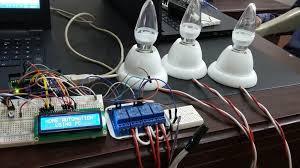
The accelerating momentum behind modern industrial modernization projects is driven by a fundamental imperative: the demand for hyper-flexible manufacturing lines capable of handling mass customization. Consumer preferences change at unprecedented speeds, forcing consumer packaged goods, automotive, and electronics manufacturers to switch production profiles frequently with minimal operational downtime. Traditional control schemes struggle under these conditions because modifying production logic often requires extensive manual reprogramming and hardware reconfiguration. In contrast, PC-based automation architectures utilize modular software libraries where recipe management, machine vision inspection, and motion tracking routines can be swapped dynamically via software updates. Stakeholders evaluating broader market developments routinely analyze the accelerating PC Based Automation Market Growth to determine how rapidly competing enterprises are abandoning single-purpose hardware modules in favor of centralized software-defined computing platforms.
Beyond operational flexibility, human-capital dynamic shifts are compelling organizations to rethink their operational control strategies. The legacy automation workforce, highly specialized in proprietary ladder logic programming environments, is rapidly retiring. Conversely, the incoming engineering generation is extensively trained in computer science disciplines, standard high-level programming languages, object-oriented concepts, and open database structures. Industrial PC control environments natively support these software engineering skill sets, significantly shortening onboarding curves for incoming technical talent. During group discussion sessions focused on organizational readiness, participants must address how leveraging software-oriented control platforms helps eliminate technical debt while making industrial sectors far more attractive to software engineers and data scientists. Ultimately, aligning automation control strategies with mainstream computer software advancement ensures long-term operational resilience and workforce productivity.
FAQ 1: Why is workforce demographics driving the transition toward PC-based automation? Newer generations of engineers possess strong computer science and software development skills, making PC platforms that support standard software languages easier for them to program and maintain than legacy PLCs.
FAQ 2: How does PC-based control support mass customization in manufacturing? Software-centric setups allow rapid switching of operational parameters, dynamic recipe adjustments, and flexible integration of vision systems, enabling factories to alter product lines with minimal downtime.
➤➤➤Explore MRFR’s Related Ongoing Coverage In Semiconductor Industry:
Non Volatile Dual In Line Memory Module Market
Wearable Payment Device Market
Smart Connected Devices Market
Multilayer Ceramic Capacitor Market
UK Multilayer Ceramic Capacitor Market
Germany Multilayer Ceramic Capacitor Market
Japan Multilayer Ceramic Capacitor Market

 Arabic
 French
 Spanish
 Portuguese
 Deutsch
 Turkish
 Dutch
Dutch
 Italiano
 Russian
 Romaian
 Portuguese (Brazil)
 Greek
Greek