

Can Gangnammould Basket Mould Design Improve Production Consistency
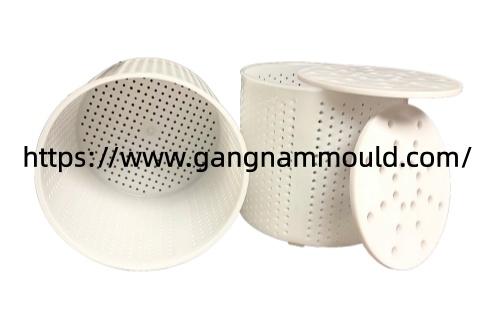
Basket Mould design can influence product quality, manufacturing expenses, and the efficiency of daily operations. For buyers planning a new production line or upgrading existing equipment, understanding how engineering decisions affect the final result can make the purchasing process more practical. Factors such as cavity structure, cooling arrangements, material selection, and demoulding methods all deserve careful attention because they can affect both production performance and long term operating costs.
A well planned design starts with a clear understanding of the intended product. Buyers should consider the basket dimensions, wall thickness, load capacity, handle structure, drainage openings, and expected usage environment. A lightweight storage container may require different structural features from a basket used for carrying groceries, organizing industrial components, or transporting agricultural products. Defining these requirements early helps the engineering team develop a suitable cavity layout and reduces the likelihood of costly design changes after manufacturing begins.
Material distribution is another important consideration. Uneven wall thickness can contribute to warping, shrinkage differences, or visible surface defects during cooling. A carefully developed cavity and feeding system can support more balanced filling and help maintain consistent dimensions across production batches. For products with reinforced handles, ribbed bases, or ventilation openings, the designer also needs to consider how these features influence material flow. These details can affect the finished product appearance as well as its practical performance.
Cooling system design also plays a significant role in production expenses. If heat is not removed evenly, parts may require longer cooling periods or experience dimensional variation. Efficiently arranged cooling channels can help regulate temperature throughout the cavity and support a more predictable production cycle. Shorter cycle times may improve output over a working shift, although the actual result depends on the resin, product dimensions, machine settings, and factory conditions. Buyers should discuss realistic cycle time estimates with their mould supplier rather than relying on general promises.
Demoulding is equally important when evaluating a design. Baskets often include deep sidewalls, textured surfaces, handles, and interlocking details that may complicate part removal. Suitable draft angles, ejector placement, and surface treatment can help reduce sticking and minimize damage during release. When these elements are considered during the design stage, manufacturers may reduce manual intervention, lower the risk of rejected parts, and maintain a smoother workflow. These benefits can be particularly useful for factories producing large quantities of similar items.
The number of cavities is another decision that directly connects equipment investment with production planning. A multi cavity configuration may increase output per cycle, but it can also require a larger machine, more complex cooling arrangements, and tighter control over filling balance. A single cavity option may be more appropriate for specialized products, lower demand, or frequent design changes. Buyers should compare projected demand, available machine capacity, expected product prices, and maintenance resources before choosing a configuration. The goal is to match production capability with actual business needs instead of paying for capacity that may remain unused.
Manufacturers should also review the construction materials and serviceability of the tool itself. Steel selection, cavity finish, wear resistance, and access to replaceable components can influence maintenance requirements over time. Products made with abrasive additives or produced in demanding operating conditions may require different considerations from general purpose household containers. Clear maintenance procedures and accessible components can help technicians inspect wear areas and complete routine servicing with less disruption.
Communication between the buyer and the engineering team is essential throughout development. Sharing sample drawings, product images, target dimensions, resin specifications, estimated annual volume, and quality expectations gives designers a clearer basis for planning. Prototype evaluation or trial production can then reveal whether the product meets requirements before regular manufacturing starts. Buyers should also ask about inspection procedures, dimensional checks, trial samples, and adjustments available after testing. A documented process makes it easier to identify potential issues and agree on practical solutions.
Cost evaluation should include more than the initial purchase price. Production efficiency, material waste, machine compatibility, maintenance, replacement parts, and expected service life all contribute to the total cost of ownership. Gangnammould works with customers to consider product requirements and tooling details during the development process, helping buyers assess design choices in relation to their production objectives. Careful planning at this stage can support informed investment decisions and more stable manufacturing operations.
For businesses preparing to develop new basket products or update existing designs, selecting a suitable manufacturing partner is an important step. Reviewing engineering capabilities, communication practices, customization options, and quality control procedures can help establish a productive working relationship. Buyers can visit https://www.gangnammould.com/product/ to review product offerings and discuss mould solutions that align with their basket specifications, production plans, and budget considerations.

 English
 French
 Spanish
 Portuguese
 Deutsch
 Turkish
 Dutch
Dutch
 Italiano
 Russian
 Romaian
 Portuguese (Brazil)
 Greek
Greek